Date: Monday 3 November 2025
Chair: Lynda Balmforth
Reporter: Steve Miller
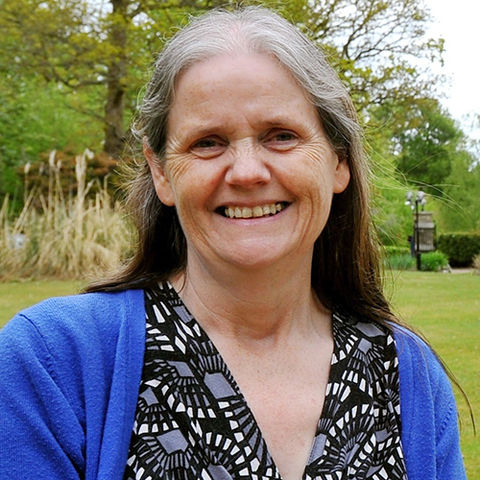
Our November meeting welcomed back Gill Blanchard, a familiar and always popular speaker. Lynda Balmforth introduced Gill, noting that her previous talks had been both enjoyable and thought-provoking. This evening’s subject, Writing Your Family History, resonated with every researcher who has ever wondered when to stop gathering facts and start turning them into a story.
Gill began by setting out six key learning objectives:
-
To recognise that writing family history is about telling real stories as well as recording facts.
-
To understand how to balance research with narrative, and when to pause research “for now”.
-
To learn techniques for structuring a family history—chronologically, thematically, or as mini-biographies.
-
To consider style and authenticity, avoiding anachronisms and over-sentimentality.
-
To appreciate the importance of organisation, planning, and self-discipline when turning notes into writing.
-
To gain confidence that everyone can write, through practice, editing, and honest feedback.
Gill explained how her own work as an author and tutor grew from years in a record office and adult education. Her writing courses evolved from repeated questions—“What do I do with all this research?”—and led to the development of workshops helping people to shape their findings into readable, engaging family histories.
She encouraged members not to think in terms of stopping their research but rather pausing it temporarily to produce something shareable. A family history could take many forms: a book, booklet, blog, website, or even a series of illustrated “biographical snapshots”. The important thing, she said, was to finish something, however small.
Gill offered numerous practical tips:
-
Use photos, documents, maps, and timelines to bring context alive.
-
Write with authority but don’t invent details—use “informed speculation” when evidence is incomplete.
-
Avoid clichés (“humble origins”, “hard-working families”) and overuse of phrases like must have or would have.
-
Keep sentences clear, vary description to prevent repetition, and always proof-read—preferably with a “fierce friend” who will be honest but kind.
-
Include relevant historical and local background to place ancestors within their time and community.
Her lively presentation, illustrated with examples from her own research, showed how to transform dry records into compelling stories that honour the lives behind the names. Gill’s humour and Yorkshire roots added warmth throughout, especially when she described creative ways to overcome “the art of prevarication” and to carve out time for writing.
The talk concluded with questions and discussion. Members agreed that Gill’s advice was both practical and inspiring—encouraging everyone to start writing, even if only a chapter or a single life story, and to let their ancestors’ voices be heard.