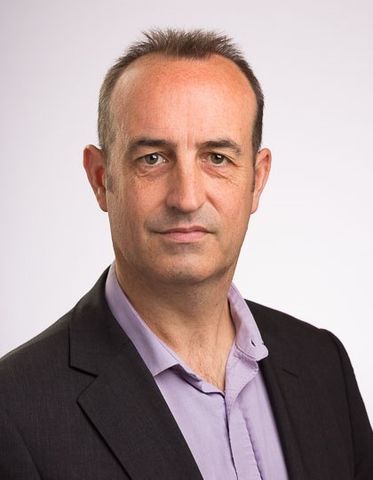
Dr Nick Barratt | AWFHS Zoom meeting | Monday 5 October 2026
How does a television programme turn months of research into an hour of discoveries, and what does it leave out along the way? At our October Zoom meeting, Dr Nick Barratt took members behind the scenes of Who Do You Think You Are? Drawing on his involvement in its early years, he explained how a proposed series about social history became a programme centred on family relationships, personal questions and the emotional impact of discovering the past.
His account brought back familiar episodes, but also gave us reasons to watch them differently. The apparently effortless arrival at the right document conceals extensive research. The reactions, however, depend on keeping the participant unaware of what is coming. Nick also asked us to think beyond television and consider how we research, interpret and preserve our own family stories.
A different way of telling history
Nick began by challenging the assumption that the programme was originally conceived as a genealogy series. The intention, he explained, was to explore ten strands of British social history, broadly from the Victorian period onwards. Each celebrity would introduce a subject through the experiences of an ancestor, perhaps someone affected by industrial poverty, migration, agricultural change or domestic service.
He contrasted this approach with television histories built around rulers, politicians and military leaders. Such programmes could be excellent, but the people living with the consequences of those decisions were often less visible. A family connection offered a way to approach historical events through an individual life and to ask what those events meant for ordinary households.
Time Team provided an important model. Tony Robinson could ask the questions a viewer might ask without pretending to be the archaeological expert. Similarly, a celebrity exploring an unfamiliar family story could act as a guide for the audience. The specialist knowledge would come from researchers and contributors, while the participant supplied curiosity and a personal connection.
Learning to value family history
Nick’s own route into genealogy helped explain his enthusiasm for this approach. His doctorate concerned medieval royal finance, including the accounts for 1225. At the Public Record Office, now The National Archives, he discovered that many visitors wanted help with their ancestors rather than the medieval records he had expected to discuss.
Watching those visitors make discoveries changed his view of family history. He recalled the excitement when a document confirmed a long-standing story, sometimes about an ancestor whose behaviour was far from respectable. The pleasure of solving a puzzle could make a distant scandal fascinating, although someone who remembered the person involved might feel very differently.
He stressed the sophistication of family historians’ work. We gather family papers, establish relationships through certificates and registers, then investigate occupations, homes and communities. Understanding a move or a change of circumstances may require local history, military history or knowledge of events overseas. The tree helps organise the evidence, but the lives behind it are what give the research meaning.
Photographs, letters, diaries, postcards and inherited objects are especially valuable because they may survive nowhere else. They can show what a person thought or experienced on a particular day. Nick’s reminder was to look closely at what families already possess before assuming that all the useful evidence will be found in an archive or online.
Finding the right participants
Turning the idea into television presented a practical difficulty. The team needed suitable stories before it could know which celebrities would make suitable programmes. Nick recalled an initial shortlist of about 150 names. Researchers considered family backgrounds and possible connections with the proposed themes, then explored what the participants already knew.
Knowing too much could rule someone out. Nick mentioned Ronnie Corbett and Miriam Margolyes as people whose existing research would have made it difficult to preserve the surprise. A programme based on discoveries needs the participant to encounter something new; simply repeating familiar facts would produce a different kind of television.
Other potential participants were reluctant to accept the production conditions. Family members who helped the researchers were asked to keep the findings confidential. Celebrities would not receive a script telling them what they were about to learn, and they would not control the final edit. Nick recalled that the pool of willing candidates consequently became much smaller.
Some early research remained useful long after the first series. A story that could not be used immediately might still provide the groundwork for a later episode. His recollections showed how much exploratory work can sit behind the finished programmes, including investigations that never reach the screen.
The work hidden by the edit
Nick described research taking roughly three to six months, followed by arrangements for locations and filming. A block of filming might last ten to twelve days, with long working days producing far more material than a single episode could contain. Editing could then occupy a further six to eight weeks. These were estimates from his experience rather than a timetable for every production.
The director knew the intended route through the story, but the celebrity usually did not. Important revelations could be filmed with several cameras so that the conversation and first reaction were captured together. Additional shots might be needed for a document or a question, yet the emotional discovery depended on what happened in the original encounter.
Filming brought its own interruptions. A quiet location might suddenly become the setting for agricultural work, road repairs or a noisy passer-by. Material lost to those distractions, along with alternative camera views and unused conversations, helped explain why so much footage disappeared before broadcast.
The result can give a misleading impression of research. A participant enters an archive and soon meets an expert with the relevant page already open. Viewers rarely see the unsuccessful searches, comparison of records or patient work needed to establish the connection. In the early series, practical material with Nick and Adrian Chiles, together with supporting online resources, helped viewers understand how to begin their own investigations.
Unexpected discoveries and genuine reactions
Lesley Garrett’s episode illustrated the difficulty of keeping a family story within a planned theme. Music and coal mining offered an obvious starting point, but research also uncovered a disturbing account involving a butcher ancestor and his wife’s death after drinking acid. Nick recalled newspaper coverage of the inquest and circumstances that raised suspicions, despite a verdict of misadventure.
The researchers worried about how Lesley would respond. Her enthusiasm for the unexpected discovery showed that the participant’s interests could lead somewhere the production team had not anticipated. It also reminded us to distinguish what records establish from the conclusions people draw: suspicion about a death does not prove murder.
Jeremy Clarkson provided another lesson. In an early attempt to persuade him to take part, the team showed him a large family tree. Several branches failed to interest him, until the Kilner name caught his attention and he connected it with the familiar jars. Nick’s account of the family business and its lost fortune recalled one of the memorable stories from the first series.
Showing the tree in advance also revealed the weakness of that approach. The discoveries had already been made before the journey began. Nick explained that withholding the research helped later participants respond as people encountering their family’s past, rather than presenters delivering a story they had rehearsed.
Ian Hislop and the evidence in a coffee tin
Ian Hislop’s interest in military history gave the researchers several possible stories, including his mother’s experiences during the occupation of the Channel Islands and his grandfathers’ service in different wars. Nick described the impact of taking Ian to a battlefield with copies of documents explaining what his grandfather had faced.
The setting helped turn a military account into a personal encounter. Battle plans and casualty figures acquired a different meaning when Ian considered a family member waiting to go into action and surviving experiences he had rarely discussed. Nick used this example to explain the empathy that family history can bring to wider historical events.
An earlier soldier presented a research problem. Two men named Murdo Matheson came from the same place and had served in the same regiment, but their battalions followed different routes. Identifying the right man mattered. A general account of the regiment could not safely substitute for evidence about the particular ancestor.
The solution came when a relative produced campaign medals kept in an old coffee tin. Identifying details on the medals helped connect the ancestor with the correct records. The family had not initially thought the objects relevant to a search through paperwork. It was a useful lesson in asking about memorabilia and examining apparently modest possessions before dismissing them.
Bill Oddie and the change of direction
For Nick, Bill Oddie’s story explained why the programme developed beyond its original plan. The intended subject was industrial history. His ancestors’ movement into Lancashire’s textile economy, and the hardship associated with the cotton shortage during the American Civil War, offered a way to show how events overseas affected working families here.
Bill’s own question concerned his mother. He wanted to understand her absence during parts of his childhood and her time in psychiatric care. Nick recalled the discovery of an older sister who had died only days after birth. That loss supplied previously missing family context and helped Bill reconsider memories and conversations he had not understood as a child.
Nick described this as the moment when the personal question became more important than the chosen historical theme. He also recalled Bill’s uncertainty about his own identity as helping to suggest the programme’s title. The account was especially moving because the research offered understanding of a relationship, even though it could not recover the opportunities lost in the past.
Nick remembered Bill wishing he had known earlier what he now understood, because he might have made a difference. That thought gave the episode a purpose beyond discovering another name or occupation. The stories participants wanted to resolve could involve grief, care, separation and experiences that families had struggled to discuss.
Jeremy Paxman and forgotten poverty
Jeremy Paxman’s episode offered a further example of research challenging someone’s assumptions about their background. Nick recalled that Jeremy initially regarded his family as comfortably middle class and felt there was little to investigate. The evidence instead led into poverty, migration and difficult decisions about how to support children.
One family line had moved from rural Suffolk into industrial employment. Another story concerned a widowed great-grandmother whose army pension was withdrawn following an investigation. Nick described the resulting hardship, cramped housing in Glasgow and the separation of children among relatives. Details of later success had obscured the insecurity of earlier generations.
The encounter with those circumstances was emotionally powerful. It showed how quickly a family’s understanding of its past can narrow to the experiences of its most recent generations. For researchers, it also illustrated the importance of following a change in address, household membership or income rather than assuming a family had always enjoyed the position it later achieved.
Useful technology and the need to check
Nick linked the programme’s influence with the growth of online research. Television encouraged people to investigate, while digitised records made a starting point easier to reach. But he questioned the impression that a family tree could unfold automatically through a sequence of hints. Each connection still needs evidence.
Transcription errors supplied familiar examples. Ditto marks can become supposed surnames, and an occupation can be distorted into something quite different. During the discussion, Steve recalled encountering ‘coral miners’ where coal miners were intended. The humour carried a practical message: an index is a finding aid, and checking the image and surrounding entries can change an interpretation.
Nick also raised concerns about artificial intelligence and altered photographs. Colourisation and animation may make an image engaging, but a generated expression or voice does not become historical evidence. He urged us to consider what future researchers might mistake for an authentic record if altered material circulates without an explanation of how it was made.
Questions and stories from members
Members recalled episodes that had stayed with them, including Una Stubbs, Paddy McGuinness and Robert Rinder. The discussion returned to the way a personal connection can make a historical subject memorable, even when the viewer has little previous interest in the celebrity. Nick also mentioned the opportunities to learn about migration and other countries through overseas versions of the programme.
Asked about future UK series, Nick expected the format to continue but made clear that he was no longer involved in the UK production and was not announcing a commission. Another question concerned whether his own ancestry could make an episode. He mentioned a great-uncle connected with Soviet espionage and his grandmother’s complicated origins, while acknowledging that his existing knowledge would reduce the element of surprise.
A question about Michael Parkinson brought a final research story. Nick challenged the suggestion that a family of farmers and miners necessarily lacked interest. His account of a farming ancestor included bereavement, family cooperation, a later marriage and separation, and a move into mining. The point was that an apparently familiar occupational background can conceal a complicated life when the evidence is followed carefully.
Preserving the stories we can still tell
Nick’s closing message concerned our own place in family history. Letters and postcards are less central to everyday communication than they once were, and digital material needs deliberate preservation. We also hold memories that younger relatives cannot obtain from a certificate or a search result.
He described his mother sharing childhood memories of wartime air raids with his daughter for a school project. Her recollections of sheltering, fear and evacuation supplied the personal experience behind the historical account. A member then recalled her own fear during the bombing of Leeds, giving the meeting an immediate example of the value of oral history.
Recording such memories, identifying photographs and explaining inherited objects give future generations evidence they may otherwise lose. Nick urged us to tell our stories in our own voices while we can. His behind-the-scenes account left us with a practical reason to return to our research: understanding the people in the tree, and preserving the experiences of those who are still here to explain them.