Introduction
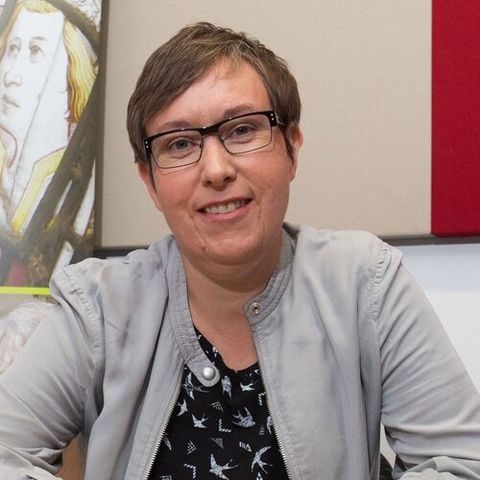
Lynda Balmforth welcomed members and introduced returning speaker Andrea Hetherington, a Leeds-based writer and researcher specialising in the social history of the First World War. Andrea explained that her talk, Lawnswood’s Great War Stories, grew from research undertaken for the Friends of Lawnswood Cemetery and explored how cemeteries can reveal far more than burial records alone — providing insight into communities, industry, war, grief, and remembrance.
Lawnswood Cemetery and Leeds During Wartime
Andrea began by outlining the history of Lawnswood Cemetery in North Leeds, opened in 1875 to serve Headingley and Burley. Designed by architect George Corson and landscape gardener William Gay, it became one of Leeds’ most prestigious Victorian burial grounds and remains one of England’s finest surviving examples of the romantic cemetery style.
The cemetery’s First World War memorials provide a unique lens through which to study Leeds during wartime. Family memorials, Commonwealth War Graves, and the cemetery’s war memorial collectively tell stories not only of military service, but also of social change, industry, and personal tragedy.
Andrea explained the development of Commonwealth War Graves policy following the First World War. Debate surrounded whether casualties should be repatriated, whether officers should receive different treatment to ordinary soldiers, and whether local populations abroad could be trusted to maintain graves. Ultimately, the Imperial War Graves Commission adopted uniform commemoration regardless of rank or social class — a revolutionary idea for the period.
The Ives Family – Service Across Three Armed Forces
One remarkable memorial at Lawnswood commemorates the Ives family, notable because it represents all three military services.
Kenneth Ives, a solicitor and member of the Leeds Rifles, died in training near York in 1914 from typhoid and pneumonia before ever reaching the front line. Derek Ives joined the Royal Navy submarine service and disappeared aboard HMS H10 in 1918 during a North Sea patrol, the submarine’s fate remaining unknown to this day. Their brother Edward transferred into the Royal Flying Corps, later serving in the Royal Air Force and surviving both world wars.
The family memorial bears the familiar words from Laurence Binyon’s For the Fallen:
“They shall not grow old, as we that are left grow old...”
A poignant reminder of how local memorials became places of remembrance for families unable to visit graves overseas.
Leeds Industry and the War Effort
Andrea highlighted Leeds’ enormous contribution to wartime production. Known as the “City of a Thousand Trades”, Leeds rapidly adapted industry to military needs, producing uniforms, boots, explosives, engineering components, and countless other materials vital to the war effort.
One fascinating example involved the Proctor family, owners of Proctor Brothers wire works. Their firm manufactured wire products ranging from fencing and industrial materials to components for wartime defences, including protective wire structures installed on Buckingham Palace to reduce Zeppelin bomb damage. The company also produced materials for gas masks and military wire systems.
The family memorial commemorates Captain Harry Metcalf Proctor, a gifted artist and illustrator who abandoned his studies to enlist. After serving at Gallipoli and later on the Western Front, he was killed during Passchendaele in 1917 aged just 22. His grave was lost amid battlefield destruction, leaving him commemorated among the missing.
War’s Cost Beyond the Battlefield
The talk explored how war affected Leeds businesses and families in very different ways.
Industrialist Sir Edward Brotherton, Lord Mayor of Leeds when war broke out, helped fund the Leeds Pals battalion and contributed substantially to wartime efforts. Yet other businesses suffered devastating personal losses. Newspaper distributor Charles Pickles lost his son Herbert Gladstone Pickles, who survived the Somme only to die during the Arras Offensive in 1917. Personnel losses weakened some family businesses so severely that firms eventually closed or were sold outside the family.
Andrea emphasised that while Leeds industry profited from wartime contracts, many prominent families simultaneously paid an immeasurable personal price.
Influenza and the Hidden Casualties of War
A particularly striking section examined the 1918–1919 influenza pandemic and its impact on returning servicemen.
Leeds experienced major outbreaks from June 1918 onwards, with schools closing and weekly death totals climbing dramatically. Andrea explained how soldiers eager for demobilisation often concealed illness for fear discharge might be delayed. This contributed to influenza spreading rapidly among returning troops and civilian communities.
Sergeant George Atack provided a moving example. Having served overseas and signed declarations confirming he was healthy, he returned to Leeds in February 1919 only to die from influenza less than a month later. Andrea suggested many deaths officially recorded as pneumonia may in reality have been influenza-related.
A German Officer Buried in Leeds
One of the evening’s most intriguing stories concerned Lieutenant Wilhelm George Manilius Bade, a German prisoner of war held near Wakefield.
Captured in 1918 and later struck down by influenza, he died in Beckett’s Park Hospital shortly after the Armistice. Lawnswood authorities permitted his burial with full military honours, attended by fellow German officers and British military representatives alike.
Andrea described subsequent research into the mystery surrounding his burial place. Although his original plot at Lawnswood appeared empty, enquiries eventually confirmed that his remains had been exhumed in 1961 and reinterred alongside other German war dead at Cannock Chase.
Families Destroyed by Loss
The emotional impact of war upon families formed one of the strongest themes of the evening.
The Calvert family lost three sons during the conflict. Their father, Rhodes Kennedy Calvert, never recovered emotionally from these losses and took his own life in 1930. Andrea’s account illustrated how grief extended long beyond wartime itself.
Even more devastating was the Stewart family of Burley, who lost five sons between 1915 and 1919 — one every year. Their story represents one of Britain’s most extraordinary examples of wartime family tragedy.
The Lawnswood War Memorial
Andrea concluded with the story of Lawnswood’s distinctive war memorial.
Unlike many Commonwealth War Graves sites, casualties buried within the memorial area do not have individual headstones. Instead, names are recorded collectively on bronze panels surrounding the Cross of Sacrifice. The memorial also preserves the memory of war casualties formerly buried at Leeds General Cemetery, where gravestones were removed after university expansion plans during the twentieth century.
A final uplifting story centred on John Bradley, a former prisoner of war and skilled stonemason who later worked on constructing the Lawnswood memorial itself. Bradley’s family later placed a commemorative vase near the memorial after his death — a fitting tribute to someone who both survived war and helped create a place of remembrance for others.
Questions and Discussion
The talk prompted lively discussion among members covering military deserters, missing soldiers, destroyed wartime records, and the challenges researchers face tracing servicemen whose records disappeared or who may have re-enlisted under false identities. Andrea shared insights from her research into wartime desertion and highlighted how complex military family history investigations can become.
Conclusion
Andrea Hetherington delivered a compelling and deeply moving presentation demonstrating how cemeteries preserve not only names and dates, but wider social history. Through individual stories of sacrifice, survival, industry, illness, and remembrance, members were reminded that cemeteries often hold far richer historical narratives than first appear.
The evening offered both practical research insights and powerful human stories that will undoubtedly remain with attendees long after the meeting ended.