Introduction
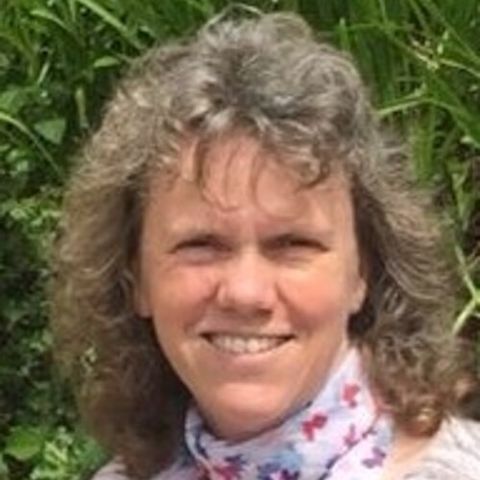
The meeting was opened by Lynda Balmforth, who introduced the evening’s speaker, Linda Hammond. The session focused on one of the most important aspects of family history research—how to move beyond assumptions and build conclusions that can be properly supported and defended.
Linda set out to help researchers distinguish between what they think is correct and what they can confidently say they know through sound evidence analysis.
The Problem with Assumptions
A key theme of the talk was the danger of assumptions in genealogy. Linda highlighted several common traps:
-
Accepting family stories as fact
-
Choosing the “obvious” person in records
-
Assuming relationships based on location or surname
-
Relying on unverified online trees
These can lead to a fragile “house of cards” family tree, where one incorrect assumption can undermine years of research .
Information vs Evidence vs Proof
Linda clearly explained three essential concepts:
-
Information – A statement found in a record
-
Evidence – Information that has been analysed and evaluated
-
Proof – A well-reasoned conclusion based on all available evidence
She compared genealogy to a legal case: a single statement is not proof—it must be tested, corroborated, and weighed against other evidence before reaching a conclusion .
Types of Evidence
Three types of evidence were explored:
1. Direct Evidence
Answers a question clearly (e.g. a birth certificate giving a date of birth).
2. Indirect Evidence
Requires multiple sources to build a conclusion.
Most genealogical work relies on this type.
3. Negative Evidence
The absence of expected records (after thorough searching) can itself be meaningful and help eliminate possibilities.
Linda emphasised that strong conclusions often come from combining multiple pieces of indirect and negative evidence rather than relying on a single record .
Evaluating Sources and Reliability
A major part of the talk focused on assessing reliability:
-
Who provided the information?
-
When was it recorded?
-
How close were they to the event?
Linda introduced the idea that it is not the record itself that is reliable—but the information within it.
She explained:
-
Primary information – from someone with first-hand knowledge
-
Secondary information – based on memory or second-hand knowledge
-
Unknown informant – common in census records and online trees
Understanding this helps researchers assign appropriate weight to each piece of evidence.
Dealing with Conflicting Evidence
Conflicting records are not a problem—they are a sign of thorough research.
Rather than choosing the most convenient answer, Linda advised:
-
Identify all conflicting statements
-
Evaluate each source and informant
-
Assign weight to each piece of evidence
-
Reach a reasoned conclusion—or accept it remains unproven
Sometimes, the correct answer is simply: “we don’t know yet”.
The Genealogical Proof Standard (GPS)
Linda introduced the Genealogical Proof Standard, which provides a framework for reliable research:
-
Reasonably exhaustive research
-
Complete and accurate citations
-
Analysis and correlation of evidence
-
Resolution of conflicts
-
A sound, written conclusion
This ensures conclusions are robust and defensible.
The WATCH Method
To simplify the process, Linda shared her practical checklist:
-
W – Weigh the source
-
A – Assess the informant
-
T – Time context
-
C – Corroborate with other evidence
-
H – Handle conflicts
This provides a quick, usable method for evaluating records and avoiding premature conclusions.
Key Takeaways
-
Genealogy is not about what seems likely—it is about what can be proven
-
Always question information, even from “good” sources
-
Most conclusions rely on multiple pieces of evidence
-
Absence of records can be just as important as their presence
-
It is acceptable—and often correct—to leave something unproven
Conclusion
This was an excellent and thought-provoking talk that encouraged all researchers—beginners and experienced alike—to take a more disciplined and analytical approach.
Linda’s clear explanations and practical examples provided valuable tools that members can immediately apply to their own research.
Acknowledgements
Our thanks go to Linda Hammond for an engaging and highly informative presentation, and to everyone who attended both in person and via Zoom.