Date: Monday 2 February 2026
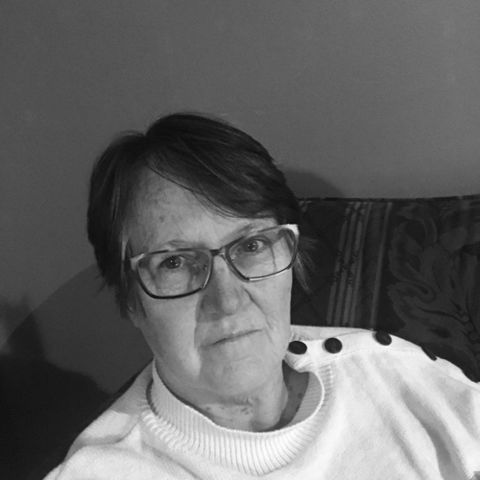
Speaker: Christine Woodcock
Introduction
The meeting was opened by Julia Wood, who welcomed members and introduced Christine Woodcock. Christine’s talk focused on the key differences between researching family history in Scotland and England, highlighting both the rich depth of Scottish records and some of the unique challenges they present.
Overview of the Talk
Christine began by stressing that, just as with English research, success in Scottish genealogy depends on knowing exactly where your ancestors came from. She then guided members through the principal online resources used for Scottish research, comparing them with more familiar English-based platforms.
She discussed FamilySearch, noting its value as a research tool while also highlighting the potential pitfalls of shared trees, which cannot be deleted and are vulnerable to inaccuracies introduced by other users. Christine also reflected on her early experiences using Genes Reunited, which she found particularly effective for connecting with genuine family researchers across the world.
A major part of the talk focused on Scotland’s People, the official website of the National Records of Scotland. Christine explained how to create a free account, navigate the search interface effectively, and avoid common mistakes that can quickly consume credits. She provided a clear breakdown of the credit system, costs, and the wide range of records available, including statutory registers, census returns, church records, valuation rolls, wills and testaments, and military-related records.
Key Differences in Scottish Records
Christine highlighted several important distinctions that often surprise researchers used to English records:
-
Statutory registration in Scotland began in 1855, later than England’s 1837 start date, but the records — particularly in 1855 — contain exceptional detail.
-
Women retain their maiden names on Scottish records (other than the census), making maternal lines easier to trace.
-
Scottish birth, marriage and death records often include extensive family information, such as parents’ details, occupations, and places of burial.
-
Irregular marriages were legally recognised in Scotland and could be formed by mutual consent, public declaration, or cohabitation and repute.
-
Children of irregular marriages were legitimate, provided neither party was already married.
Census Records Explained
Christine walked members through the evolution of the Scottish census, explaining what information was collected in each census year from 1841 to 1921. She explained quirks such as age rounding in 1841, the introduction of relationship-to-head-of-household in 1851, fertility questions in 1911, and the orphanhood column added in 1921.
She also explained how marginal notes and Records of Corrected Entry (RCEs) can provide crucial additional information and are now free to view.
Naming Patterns and Common Pitfalls
One of the most engaging sections of the talk explored Scottish naming patterns, which can easily confuse researchers unfamiliar with them. Christine explained the traditional order in which children were named after grandparents, parents, and siblings, often resulting in multiple cousins sharing identical names.
She also covered the widespread use of diminutives and interchangeable forenames, along with fluid spelling of surnames such as Mac and Mc, stressing that these variations are not linked to religion or nationality but simply to how names were recorded at the time. Practical tips were shared on using wildcards in searches to avoid missing key records.
Questions and Discussion
The talk prompted a lively question-and-answer session, with members asking about irregular marriages, the use of mothers’ maiden names as forenames, surname variations, and research challenges involving Irish and Scottish connections. Christine answered questions in detail, drawing on personal examples from her own family research, which added both clarity and humour to the discussion.
Conclusion
Christine Woodcock delivered an informative and highly practical talk that gave members a clearer understanding of Scottish genealogy and the confidence to approach Scottish records more effectively. The session was particularly valuable for those with Scottish ancestors and generated strong engagement and discussion among attendees.
A handout is available for this talk in the Digital Library https://awfhs.org.uk/members/library/view.php?file=doc_Finding_Your_Scottish_Ancestors_-_The_Basics.pdf