Introduction
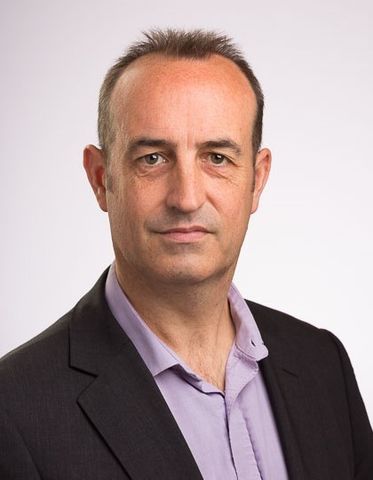
Our September meeting welcomed Dr Nick Barratt, well known to many as a professional genealogist, author, broadcaster, and a familiar face from BBC’s Who Do You Think You Are?. Nick joined us online to give a thought-provoking talk about the impact of artificial intelligence (AI) on the future of family history. His presentation explored what AI can and cannot do, where it might help genealogists, and the responsibilities we have as researchers and as societies when using emerging technologies.
The meeting, chaired by Lynda Balmforth, attracted a strong turnout of members from across Yorkshire and beyond. For just over an hour, we were taken on a guided tour through the opportunities and pitfalls of AI, followed by an engaging question-and-answer session.
What is AI?
Nick began by setting the scene. AI, he explained, is not one single tool but a broad term for systems that learn from large amounts of data and then generate responses or predictions. From voice assistants on our phones to the recommendation engines of streaming services, most of us already use AI daily without realising it.
In the genealogical world, AI has started to appear in record transcription, handwriting recognition, image enhancement, and even chatbots that can summarise documents. These advances are exciting, but Nick urged caution: “We have to question how some of the AI works,” he said, reminding us that the algorithms are only as good as the data they are trained on.
Opportunities for Genealogists
Several areas where AI can genuinely assist researchers were highlighted:
-
Transcription and OCR: AI can speed up the conversion of handwritten records into searchable text, especially where handwriting is poor.
-
Search and Indexing: AI can connect names, places, and dates across different datasets, revealing patterns that might otherwise be overlooked.
-
Image clean-up: Old photographs and scanned registers can be enhanced, sharpened, or colour-corrected to reveal hidden details.
-
Translation: Machine translation of foreign records can provide quick working drafts, opening up new sources for non-linguists.
These applications, Nick stressed, are best seen as tools to save time and not as replacements for critical research.
The Pitfalls: Hallucinations and Ethics
No new technology comes without drawbacks. One of the greatest risks in using AI is misinformation. AI systems can produce “hallucinations”: plausible-sounding but entirely incorrect statements.
Nick warned: “Treat AI output as leads. Record sources, double-check facts, and never cite AI as a primary source.”
Other challenges include:
-
Bias: If an AI has been trained on limited or skewed data, its outputs may reflect those biases.
-
Copyright and Consent: When using AI tools that rely on images, newspapers, or archival material, genealogists must respect intellectual property.
-
Provenance: AI may generate text without clear references. Always trace information back to original sources.
The Role of Societies
A particularly valuable part of Nick’s talk focused on what family history societies can do. He sees societies like AWFHS as key players in bridging the gap between cutting-edge technology and the traditional values of good genealogy.
Practical steps suggested included:
-
Digitisation Projects: Begin with small, high-value collections such as local registers, society publications, or cemetery records.
-
Standards: Define how transcriptions should be formatted, cited, and stored to ensure consistency.
-
Community Collaboration: Harness the collective knowledge of members. AI might transcribe, but volunteers are still needed to check accuracy.
-
Education: Offer members training in evaluating AI outputs and understanding their limitations.
Nick also highlighted the importance of transparency. If AI has been used at any stage—whether to clean an image, transcribe handwriting, or suggest matches—this should be stated openly so that others can understand the context.
Audience Questions
The Q&A session showed the level of member interest. A few highlights:
-
Will AI make traditional research skills redundant?
Nick was firm: “No. It can accelerate tasks, but the heart of genealogy remains human judgement—validating sources and understanding context.” -
How can societies like AWFHS get involved?
Start small, he advised. Choose projects that bring immediate value to members, develop clear data standards, and invite members to contribute as reviewers. -
What about accuracy and hallucinations?
AI should never be treated as infallible. “Always cite the original record, not the machine,” Nick reminded us. AI is a tool for leads, not conclusions.
Memorable Lines
Throughout the evening, Nick offered short, striking remarks that stuck with the audience:
-
“And this is where the AI comes in.”
-
“The original use of this AI was to create algorithms.”
-
“We have to question how some of the AI works.”
Conclusion
The talk was warmly received. Members appreciated Nick’s balanced view: neither uncritical enthusiasm for AI nor outright suspicion, but a recognition of its potential when handled responsibly.
Family history has always been about piecing together fragments of evidence to tell human stories. AI offers new ways to speed up some of the legwork, but as Nick reminded us, the real skill remains in our ability to interpret, verify, and preserve those stories with care.